F-35 Stealth Fighter: 3 Variants Redefining Modern Warfare
Beyond just being invisible to radar, the F-35 acts as a flying command center that reshapes how modern wars are fought.
The F-35 Lightning II is a fifth-generation multirole stealth fighter developed by Lockheed Martin through a massive multinational partnership led by the United States and the UK. It doesn't just hide from enemies; it uses advanced sensor fusion to gather battlefield data and share it instantly with allies, serving as the ultimate "information hub" in the sky.
* Tri-Service Integration: Designed under the Joint Strike Fighter (JSF) program to meet Air Force, Marine Corps, and Navy requirements within a single platform. * Advanced Sensor Fusion: Merges radar, electro-optical, and infrared data into a single, intuitive picture for the pilot. * Unmatched Stealth: Features a minimal Radar Cross Section (RCS) to penetrate enemy air defenses with high survivability. * Global Standard: Operated by key U.S. allies including Israel and Japan, creating a unified network of advanced aerial power.

Why did the F-35 become the 5th-generation standard?
The journey of the F-35 began with the Department of Defense's JSF program, which aimed to solve a massive inefficiency. In the past, the military spent billions developing separate fighters for the Air Force, Marines, and Navy; the F-35 changed that by consolidating these needs into one versatile platform.
Lockheed Martin didn't just build one plane; they engineered three distinct variants to handle different environments. This wasn't a simple engine tweak—it involved complete structural redesigns to ensure each branch got exactly what it needed for its specific mission profile.
As a result, the F-35 has evolved into a "global standard platform." According to recent defense industry analyses from 2025 and 2026, this standardization allows for massive economies of scale, lowering long-term maintenance costs and enabling real-time data sharing during coalition operations through shared software architectures.
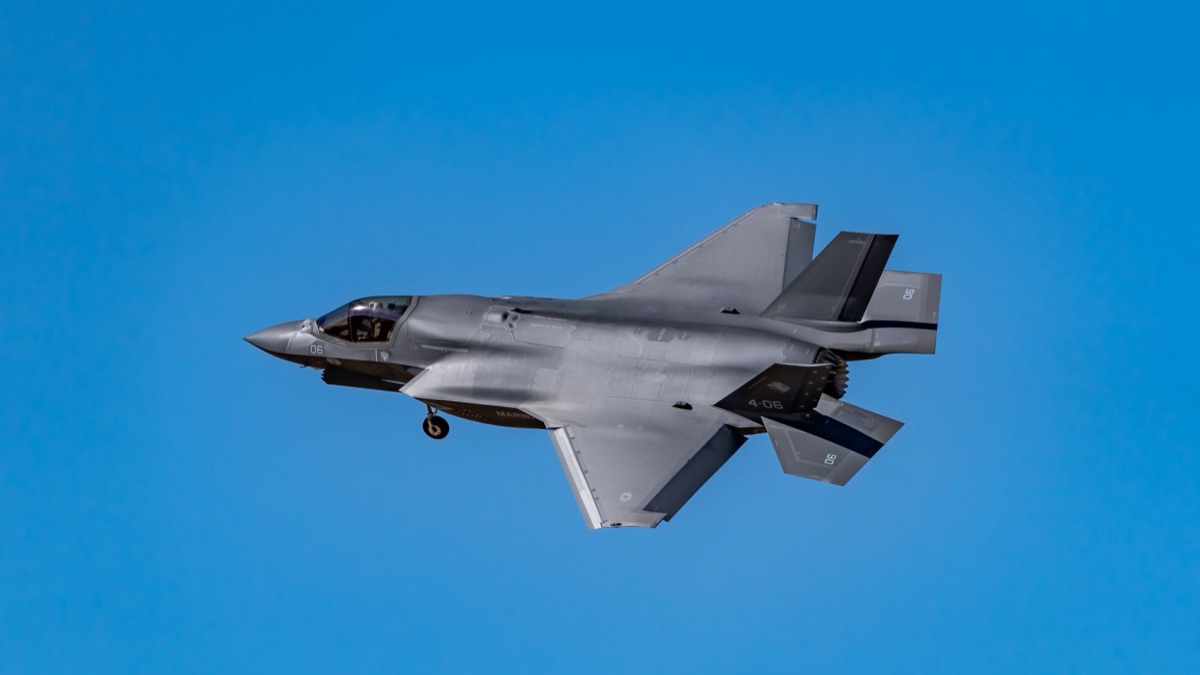
Comparing the A, B, and C variants
The F-35 is not a "one size fits all" aircraft. Depending on whether it's launching from a desert runway or a carrier deck in the Pacific, the hardware changes significantly.
| Feature | F-35A (Conventional) | F-35B (STOVL) | F-35C (Carrier) |
|---|---|---|---|
| Primary User | U.S. Air Force | U.S. Marine Corps | U.S. Navy |
| Takeoff/Landing | Standard Runway | Short Takeoff / Vertical Landing | Catapult & Arresting Gear |
| Key Advantage | Highest sortie rate & economy | Operates from small, austere bases | Reinforced for heavy carrier landings |
| Design Focus | Speed and efficiency | Versatility in tight spaces | Large wings & rugged landing gear |
The F-35A is the backbone of the Air Force, optimized for high-speed conventional operations. The F-35B features Short Takeoff and Vertical Landing (STOVL) capabilities, which I've seen demonstrated at airshows—it’s incredible to watch a multi-million dollar jet hover like a helicopter. Finally, the F-35C is built specifically for the Navy, with larger wings and much heavier landing gear to survive the violent "controlled crashes" of carrier landings.

Stealth and Sensor Fusion: The Invisible Eyes and Ears
The true terror of the F-35 isn't just its ability to stay off radar; it’s that it sees everything while remaining unseen. This is driven by "Sensor Fusion," a technology that prevents pilots from being overwhelmed by raw data.
- Radar Deflection: Special radar-absorbent material (RAM) and geometric shaping scatter incoming radar waves, keeping the aircraft's signature extremely low.
- Integrated Targeting: The AN/APG-81 AESA radar and the Electro-Optical Targeting System (EOTS) allow the pilot to track targets with pinpoint accuracy without even turning the jet toward them.
- Helmet-Mounted Display (HMD): All this data is fed directly into the pilot's helmet. I remember seeing a demo where a pilot looked "through" the floor of the cockpit to see a target on the ground—it felt like science fiction, but it’s reality.
However, some critics argue that the reliance on complex software makes the jet vulnerable to cyber interference or software glitches. While Lockheed Martin has addressed many of these through the Autonomic Logistics Information System (ALIS), the complexity remains a point of debate among defense experts.
Real-world combat and global adoption
Despite early development controversies, the F-35 is now a proven combat platform. A standout example is Israel, which operates the F-35I "Adir." As noted in reports from the Israeli Air Force regarding their long-term deployment, they were among the first to integrate these jets into active, high-stakes security environments.
The program’s reach is truly global. According to Janes' 2025 military intelligence updates, more nations are prioritizing the F-35 in their next-generation procurement cycles than any other platform. This creates a massive "network effect" where allies can fight together using the same digital language.
F-35 vs. Other 5th-Generation Fighters
To understand the F-35, you have to compare it to its peers, though they serve different roles:
* F-22 Raptor vs. F-35: The F-22 is an "Air Superiority" fighter—it's built to win dogfights and dominate the sky through pure maneuverability. The F-35, however, is a "Multi-role Information Hub." It might not outmaneuver an F-22, but it provides the data that tells everyone else where to strike. * The "Orchestra" Concept: If the F-22 is the star soloist, the F-35 is the conductor. It gathers intelligence and distributes coordinates to missiles, ships, and ground troops in real-time.








Comments 0