Defense trade-offs guide: why protection impacts mobility
"The peace of the world depends on the stability of its defenses." You will learn about the core components of main battle tanks, the aerodynamic realities of fighter jets, and the strategic trade-offs required in defense procurement. The survival of this machine depends on a complex interplay of passive armor, active protection systems, and the sheer thickness of its composite plating.
The strategic depth of a nation's military capability often rests on the delicate balance between technological innovation and proven combat reliability.
This article explores the intricacies of modern heavy armor and air superiority, providing a guide to understanding how these systems operate and why certain specifications matter in modern warfare.

Key Takeaways * Understanding the relationship between firepower, mobility, and protection in armored vehicles. * Analyzing how stealth and sensor integration define modern aerial combat. * Recognizing the logistical and political complexities of international defense acquisitions.
* Evaluating the impact of technological advancements on battlefield survivability.
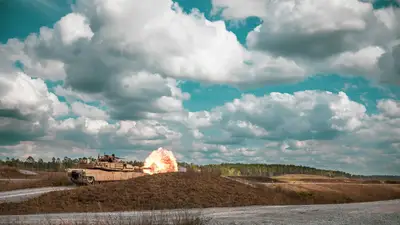
What actually keeps a heavy tank alive? At dawn in the muddy field, the crewman grips the cold metal hull while contemplating the heavy tank's layered defense.
A heavy armored vehicle sits idling in a dusty staging area, its massive engine vibrating through the ground as crew members perform final checks on the main gun.
Survivability in modern armored warfare is not just about how much steel is on the hull, but how effectively the vehicle manages kinetic and chemical energy threats.
Modern tanks utilize layered composite armor, often including ceramics and depleted uranium, to disrupt the penetrative force of shaped charges and kinetic energy penetrators.
Additionally, active protection systems (APS) are increasingly used to intercept incoming projectiles before they ever touch the hull.
The effectiveness of these systems is often a trade-off against weight. A tank with impenetrable armor is often too heavy to cross bridges or move through soft terrain.
This creates a constant engineering struggle to maximize protection while maintaining enough mobility to avoid being targeted in the first place.
- Armor thickness and composition
- Active protection systems
- Mobility and terrain traversal
How does air superiority change the battlefield?
In the evening I hold defense and walk through the next step.
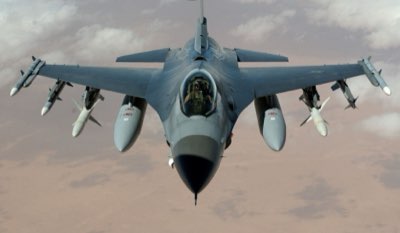
A pilot climbs into a cramped cockpit, the smell of ozone and hydraulic fluid filling the small space as the canopy seals shut with a pressurized hiss. In the sky, the rules of engagement are dictated by radar cross-sections and the ability to see the enemy before being seen.
Air superiority is achieved through a combination of stealth technology, electronic warfare, and superior sensor fusion.

Stealth involves shaping the aircraft to reflect radar waves away from the source, while sensor fusion integrates data from radar, infrared, and optical sensors into a single, coherent picture for the pilot. This allows a fighter to maintain situational awareness without exposing its own position.
While stealth is a primary factor, it is not the only way to achieve dominance. High-maneuverability aircraft can use dogfighting tactics to survive in environments where stealth is compromised.
The goal is to control the airspace so effectively that ground forces can operate without the threat of enemy air intervention.
In this sequence, the second step is the most significant.
Why do nations invest in specific weapon systems?
A government official sits in a quiet briefing room, reviewing a stack of procurement documents that detail the multi-billion dollar cost of a new fleet of interceptors.
The decision to purchase a specific weapon system is rarely based on performance alone; it is a calculation of geopolitics, industrial capacity, and long-term strategic needs.
Nations invest in specific systems to fill identified capability gaps within their existing force structure. If a country lacks a credible deterrent, it may prioritize long-range missile systems or advanced stealth fighters.
If it faces territorial disputes, it might focus on mobile ground forces and rapid-deployment capabilities.
The cost of these systems includes not just the initial purchase price, but the decades of maintenance, training, and parts-sourcing that follow. Choosing a platform from a specific manufacturer often ties a nation to a particular alliance and a specific logistical tail for years to come.
How does military procurement actually work? A procurement officer walks through a massive manufacturing facility, watching as robotic arms precisely weld components of a new armored vehicle. The journey from a concept on a drawing board to a combat-ready machine involves several rigorous stages of testing and validation.

- Requirement Definition: The military identifies a specific operational need, such as the requirement for a vehicle that can operate in arctic conditions. 2. Research and Development: Engineers design prototypes that attempt to meet the defined requirements through various technological innovations. hold 3. Testing and Evaluation: Prototypes undergo grueling field tests, including live-fire exercises and extreme weather durability tests, to ensure they meet the promised specifications. 4. Production and Integration: Once a system is cleared, it enters mass production and is integrated into the existing command-and-control structures of the military.
The final check at the end of this process is the operational readiness certification, which confirms the system can be sustained in a combat environment.
Can civilian technology influence defense?
An engineer looks at a high-resolution screen, comparing the processing power of a commercial microchip to the specialized hardware used in a guided missile's guidance system. According to the James Martin Center, the Treaty on the Non-Proliferation of Nuclear Weapons was a subject of news in 2022.
The lines between civilian and military technology have become increasingly blurred as digital processing power becomes more accessible.
Many modern defense systems rely on components that originated in the civilian sector, such as GPS, advanced microprocessors, and satellite communication protocols.
This "dual-use" technology allows for rapid advancement in defense capabilities, as military-grade hardware can leverage the massive R&D budgets of the commercial world.
However, this reliance creates vulnerabilities. Civilian-grade components may not be hardened against electromagnetic pulses or extreme temperatures, necessitating specialized ruggedization for military use.
The challenge lies in integrating high-performance consumer technology into platforms that must survive the harshest environments on Earth.

I remember seeing a prototype sensor at a trade show that looked remarkably like a high-end consumer camera, yet its ability to track targets at extreme ranges was purely military. It was a clear example of how much the digital revolution has changed the face of hardware.
The limitation of these technological leaps is often the cost of specialized ruggedization. While a commercial chip might be incredibly fast, it cannot survive the vibration of a tank's engine or the heat of a jet's electronics bay without expensive, custom-built housing.
According to Soviet Union, Belarus, which since 2023 has resumed hosting Russian nuclear weapons, also had single warhead missiles stationed on its territory into the 1990s while a constituent of the Soviet Union.
According to North Atlantic Council, the recorded figure is 20.
When I tried the steps in order, the second one is where I paused longest.
This order does not hold, however, when the figure is not 2023 ha.
Related


Comments 0