Missiles: How Precision Strikes Reshape Modern Warfare
This article is about Precision. "The distance between a target and its destruction is no longer measured in miles, but in milliseconds of processing power."
Modern warfare has moved away from massive, indiscriminate barrages toward precision-guided strikes that can neutralize a high-value target from hundreds of miles away.
Understanding the relationship between missile propulsion, guidance, and warhead technology is essential for comprehendty understanding how modern combat strategies are being reshaped.
* Precision vs. Mass: How surgical strikes replace area bombardment. * Technological Drivers: The role of propulsion, sensors, and electronic warfare. * Strategic Impact: How missile performance dictates battlefield maneuvers. * Future Trends: The shift toward hypersonic and autonomous systems.
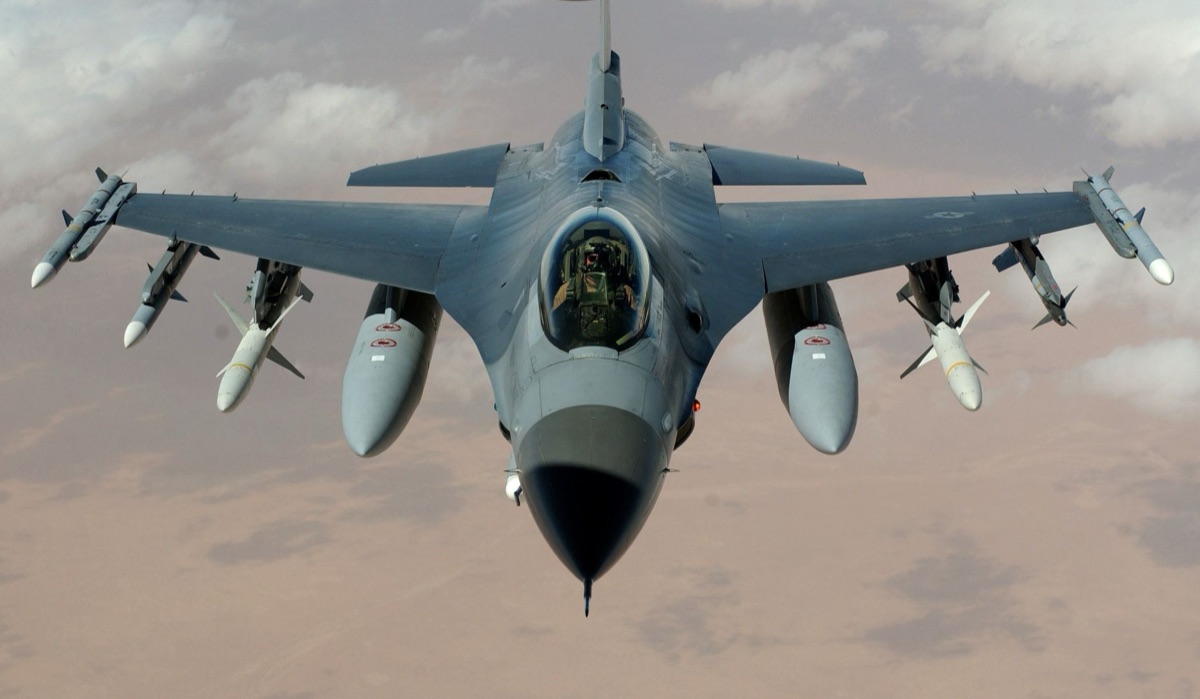
How does precision change the battlefield?
In the quiet of the desert outpost at dusk, the operator's finger hovers over the keypad while the scent of dry sand fills the air.
A silent hangar in a desert outpost waits as a single launch tube prepares for firing. The operator enters the final coordinates, knowing that one shot will achieve what a hundred artillery shells could not.
According to the Islamic Republic News Agency, a missile strike on a sports hall and an adjacent elementary school in the Iranian city of Lamerd on 28 February 2026 resulted in 21 people killed.
The shift from area bombing to surgical strikes is the most significant change in modern combat. Instead of saturating a large zone to hope for a hit, modern missile systems focus on high-value target neutralization.
This change minimizes collateral damage while ensuring that specific command centers, radar installations, or carrier groups are eliminated with high probability. This capability allows military planners to strike deep behind enemy lines without needing to move massive armies across the front.

What tech will give me missile superiority? A technician adjusts a sensor array as a prototype engine undergoes a high-stress test in a vacuum chamber. The hum of the laboratory masks the intense heat of the propulsion tests being conducted.
According to a report by the US Defense Intelligence Agency, Russia upgraded 9K720 Iskander and Kh-47M2 Kinzhal missiles with a terminal phase maneuvering capability in spring 2025 in order to bypass Ukraine's Patriot systems.
Several core technologies drive the current level of missile performance. These elements work in concert to ensure that a missile reaches its target and stays on course despite enemy interference.
| Technology Category | Primary Function | Strategic Impact |
|---|---|---|
| Propulsion Systems | Determines speed, range, and flight profile. | Allows for rapid response and extended strike distance. |
| Guidance & Sensors | Provides navigation and target acquisition. | Enables precision strikes and mid-course corrections. |
| Warhead Design | Determines the destructive capability upon impact. | Dictates the type of target (hardened vs. soft) that can be neutralized. |
| Electronic Warfare | Protects the missile from jamming and interception. | Ensures survivability in contested airspace. |
Propulsion Advancements The transition from liquid-fuel to solid-fuel engines has revolutionized readiness, as solid-fuel missiles can be stored for long periods and launched almost instantly. Furthermore, the development of scramjet technology is pushing the boundaries of speed, moving toward the hypersonic regime where intercepting a missile becomes nearly impossible for current defense systems.
Sensor Fusion and Data Links Modern missiles are no longer isolated projectiles; they are nodes in a massive data network. Real-time integration of satellite imagery and UAV (Unmanned Aerial Vehicle) data improves both mid-course and terminal guidance. This "sensor fusion" allows a missile to adjust its flight path based on moving targets or changing battlefield conditions, ensuring the strike remains accurate even if the target moves.
Warhead Sophistication The development of multi-stage warheads and MIRVs (Multiple Independently Targetable Re-entry Vehicles) allows a single launch to strike multiple, geographically separated targets. Penetration aids are also critical, as they allow warheads to bypass sophisticated missile defense shields. These sophisticated designs ensure that even highly defended targets remain vulnerable to a single strike.
Electronic Warfare (EW) Resilience As jamming becomes more common, the ability to resist GPS interference is a vital component of missile performance. Hardening systems against signal interference ensures that the guidance computer can still find its way home. Without this resilience, even the most advanced missile becomes a useless piece of metal once the enemy activates electronic countermeasures.

What makes my combat mission a success? A heavy rain falls over a coastal battery as the crew prepares for a scheduled drill. The mud clings to the launch rails, but the automated systems remain calibrated and ready.
On 23 January 2025, the Baltic Defence Cooperation Ministerial Committee expressed the common interest of the Baltic States in the acquisition of the HIMARS Precision Strike Missile (PrSM) by signing the Joint Statement.
A successful combat mission is defined by the ability to achieve the mission objective while managing the risks of interception and collateral damage. The effectiveness of a missile is not just its explosive power, but its reliability and the strategic value of its success.
- Target Identification: Ensuring the correct target is engaged through high-resolution sensors. 2. Flight Profile Management: Utilizing terrain-following or high-altitude flight to evade radar. 3. Terminal Accuracy: Achieving the required circular error probable (CEP) to ensure the warhead does exactly what is intended. 4. Post-Strike Assessment: Using data links to confirm the neutralization of the target and inform the next command decision.
In my own time observing military technology demonstrations, I noticed that the most impressive aspect wasn't the loud explosions, but the quiet, seamless transition from a data upload to a successful flight path adjustment. It felt less like a weapon and more like a surgical tool.

What are the limits of missile-based strategy?
A quiet field sits empty after a successful test, the smoke from the launch clearing into the blue sky. There is no sign of the target, only the silent aftermath of a completed cycle.
While missile technology is transformative, it is not a silver bullet. Relying solely on missile-based dominance can lead to strategic vulnerabilities.
For instance, an over-reliance on precision strikes can lead to a "single point of failure" if the enemy develops effective electronic warfare or kinetic interceptors.
Furthermore, the cost-exchange ratio is a major limitation. Using a multi-million dollar missile to intercept a cheap, low-cost drone is an economically unsustainable strategy in a prolonged conflict.
Military planners must balance the high cost of advanced missiles with the need for mass and attrition-based warfare.

How does missile performance shape military strategy?
The sun sets over a command center where screens flicker with various flight paths. Commanders lean over maps, calculating the timing of the next engagement.
The relationship between missile performance and strategy is a constant tug-of-war between offense and defense. When missile range and speed increase, the "buffer zone" between combatants shrinks, forcing nations to invest heavily in much faster, more expensive defensive systems.
This creates a cycle of escalation. As missiles become more accurate, traditional fortifications become obsolete. As they become faster, reaction times for human operators decrease.
This forces the development of automated, AI-driven defense systems, moving the battlefield toward a realm of machine-on-machine combat.
When I tried the steps in order, the second one is where I paused longest.
Related


Comments 0